The Quartet
Four players, one sound
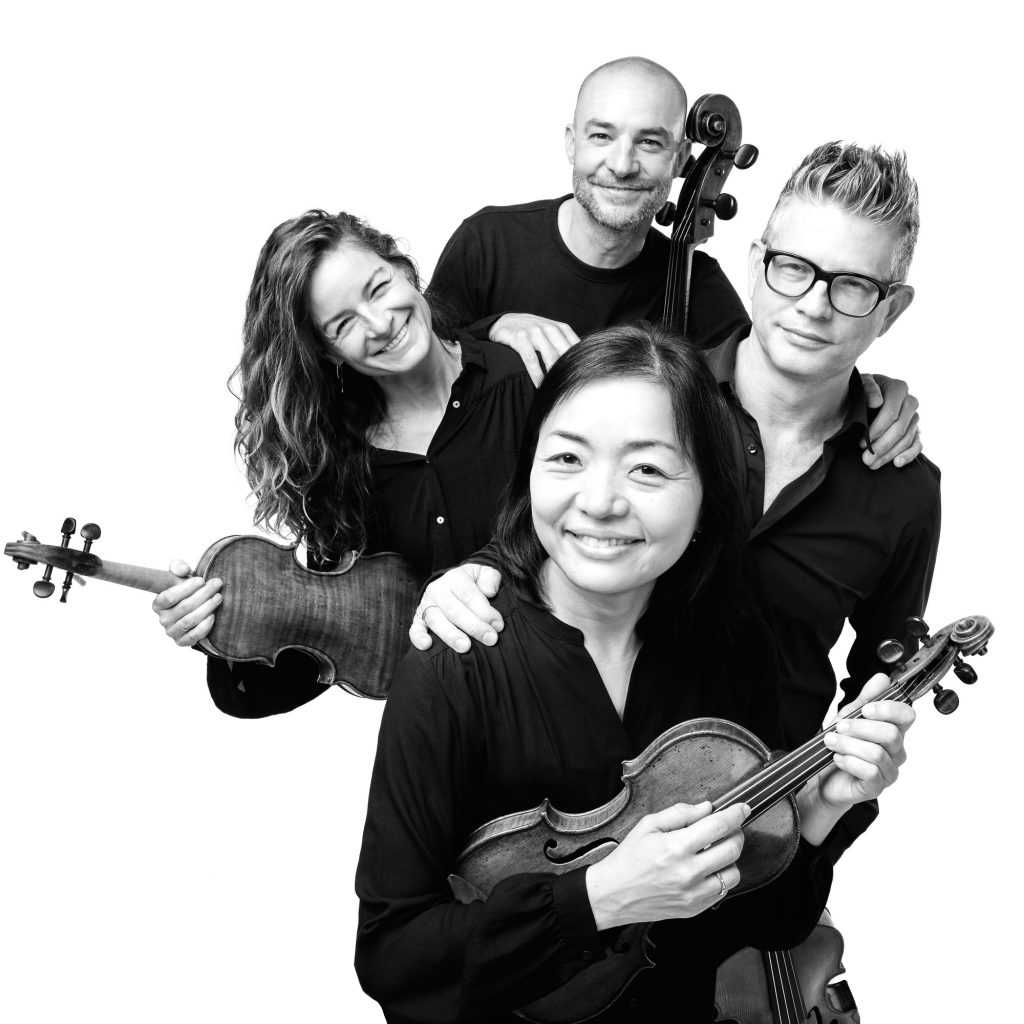
The Galatea Quartet was formed in 2005 by the siblings Sarah and Julien Kilchenmann, Yuka Tsuboi and Hugo Bollschweiler. Two decades on, they still play as friends: curious, close and always looking for a new way into a piece.
Four voices
How a string quartet works
Two violins, a viola and a cello: four voices, like the soprano, alto, tenor and bass of a choir. Joseph Haydn shaped the form in the 18th century, and composers from Mozart and Beethoven to Bartók and today’s writers have given it some of their most personal music. There is no conductor: the four players listen, breathe and lead each other.
Two violins
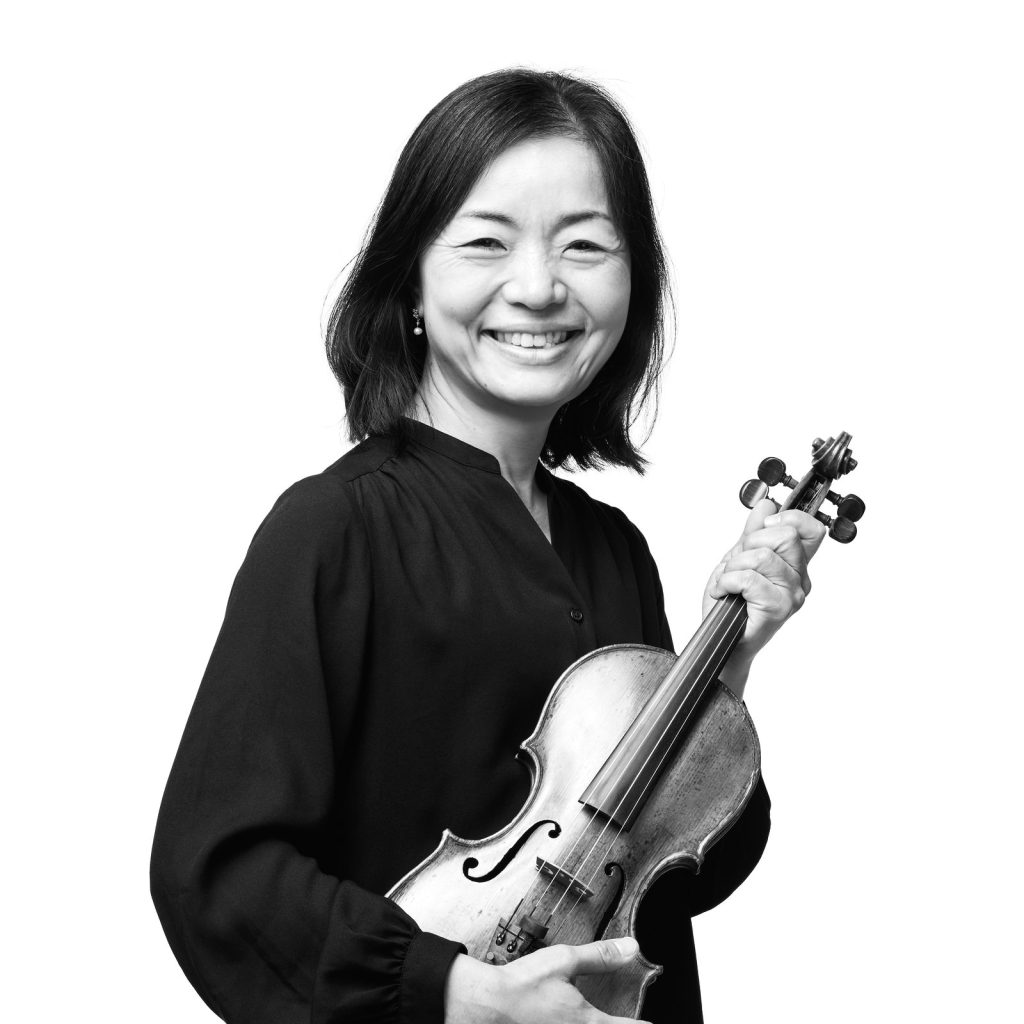
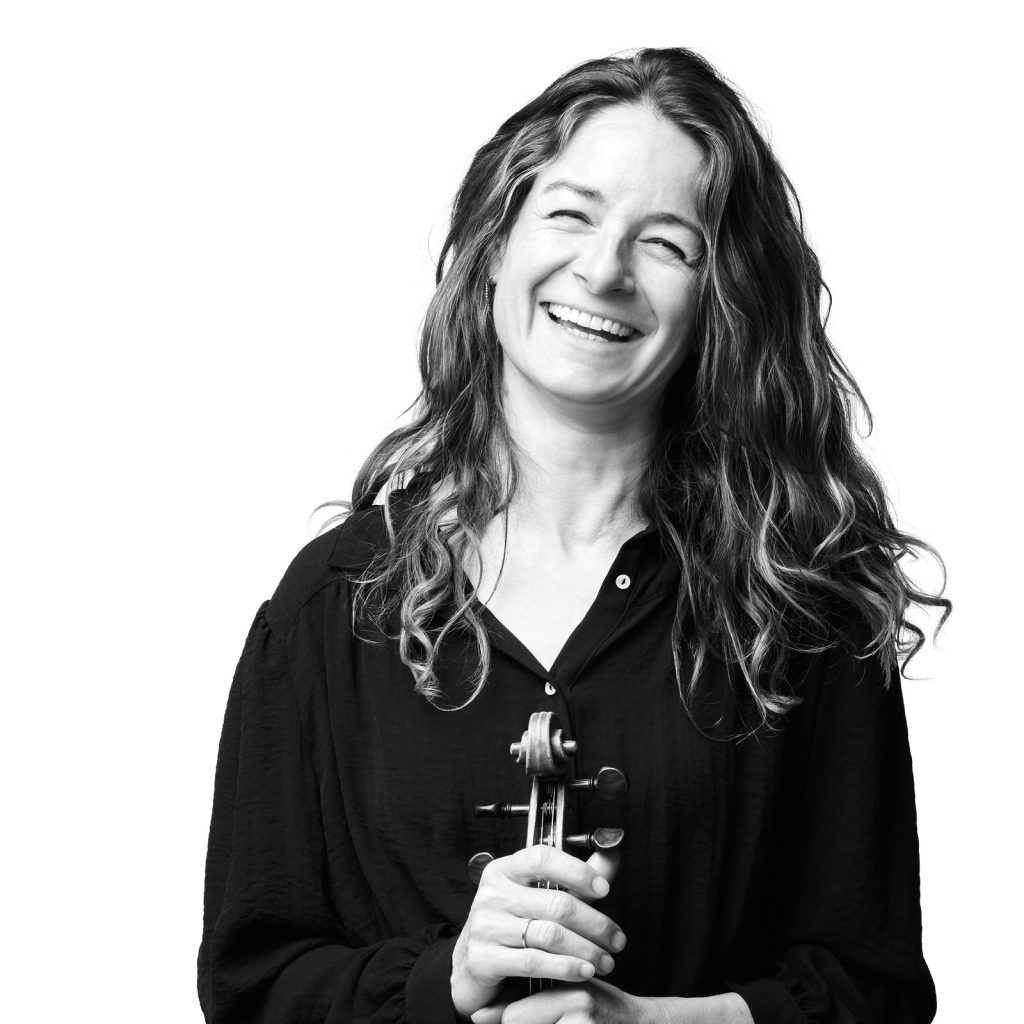
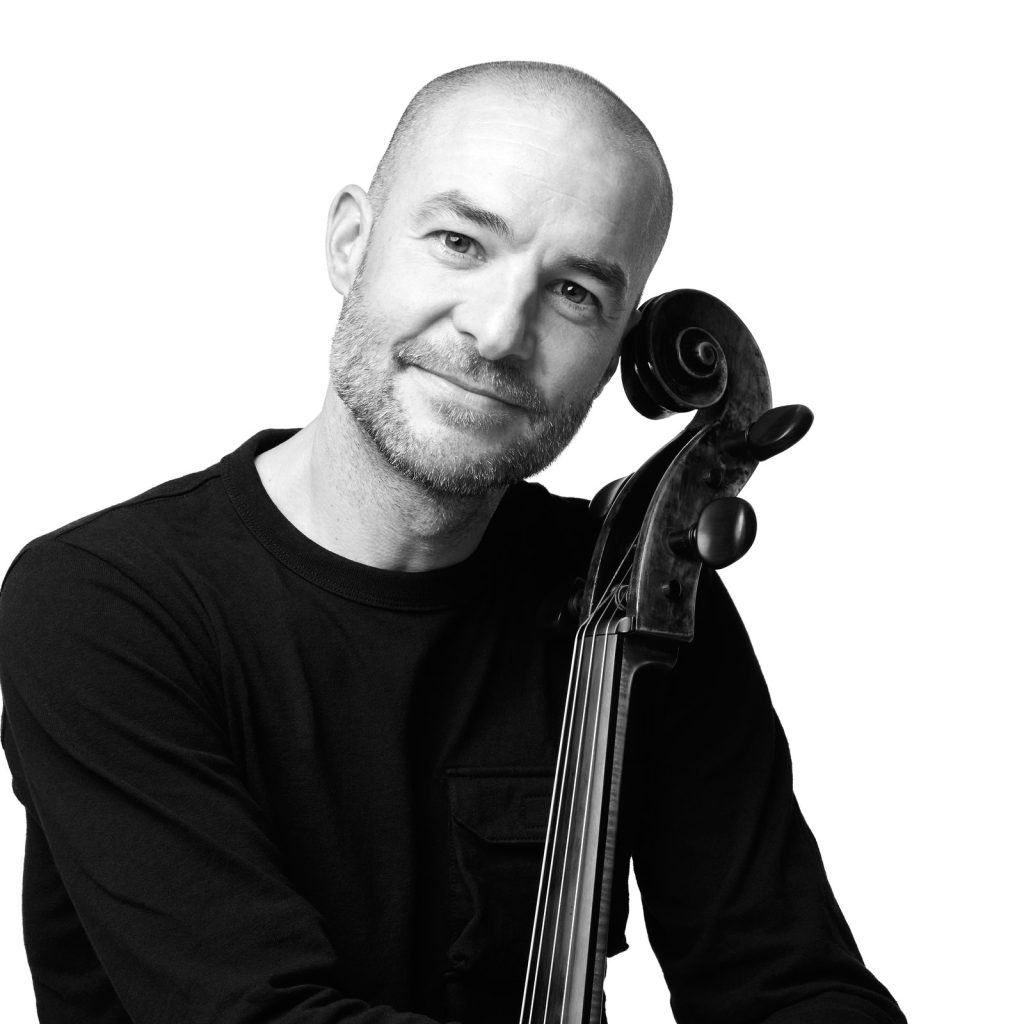
Yuka Tsuboi · Sarah Kilchenmann
The highest voices. The first violin often carries the melody and gives the breath and the nod that start a piece; the second violin weaves the inner harmony and the rhythm, and takes the tune whenever the music hands it over. The same instrument, two different jobs.
The viola
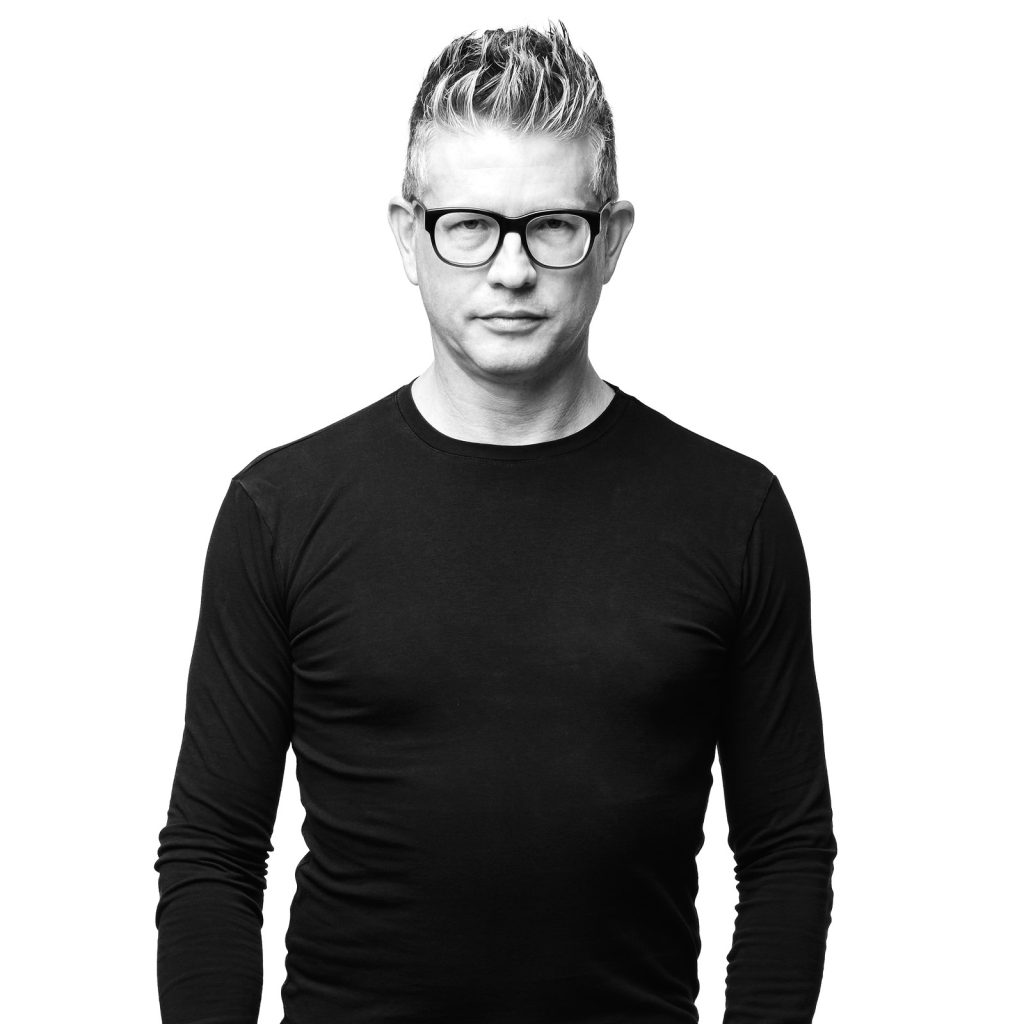
A little larger than the violin and a fifth lower, read in alto clef. The viola sits in the middle of the sound: it fills in the harmony, colours the chord from inside and holds the four together.
The cello
The bass of the quartet, an octave below the viola. The cello lays the foundation and the pulse the others build on, and with its singing tenor range it often takes the melody too.
This is how a quartet is written: one line for each player, read together from top to bottom. Here the four play a single chord.
Click a note to hear one voice, or play the chord.
How it began
The four studied in Zurich with Stephan Görner of the Carmina Quartet, and in Berlin with the Artemis Quartet. They are fellows of the European Chamber Music Academy and are close to its founder, Hatto Beyerle.
Prizes at the Concours de Genève, in Zurich, Osaka and Bordeaux followed, and with them invitations to play across Europe, Japan, Argentina, Canada, Israel and India: from the Wigmore Hall and the Amsterdam Concertgebouw to the Tonhalle in Zurich.
On record
Our first album, Bloch: Landscapes, was released by Sony Classical in 2011 and won the ECHO Prize in 2012 for the best chamber music recording of the 20th and 21st century. Belle Époque, with Debussy, Menu and Milhaud, followed in 2014, and Tango in 2018. In 2025 we recorded Fabian Müller’s string quartets 2 to 4.
Alongside the great quartets we love new music, and we have given first performances of works by Martin Derungs, Hans-Ulrich Lehmann, Heinz Marti, Peter Wettstein, Martin Schlumpf and Rodolphe Schacher. We have worked with Isabel Mundry, Helmut Lachenmann, Iiro Rantala and Jon Lord, and we perform our own version of Pink Floyd’s “The Dark Side of the Moon”.
Prizes and honours
- Concours de Genève, 2006
- Migros Chamber Music Competition, Zurich, 2007
- International Chamber Music Competition, Osaka, 2008
- String Quartet Competition, Bordeaux, 2010
- ECHO Prize for Bloch: Landscapes, 2012
- Culture Promotion Prize of the Canton of Zurich, 2013